Full-flake standard
Base coat, full broadcast of flake and a polyaspartic topcoat. Hides sand and dust best and suits most family garages.
Your garage probably holds more than a car. Boats, jet skis, side-by-sides and RVs all leave their mark on concrete. A properly built coating turns that slab into a floor you can hose off.
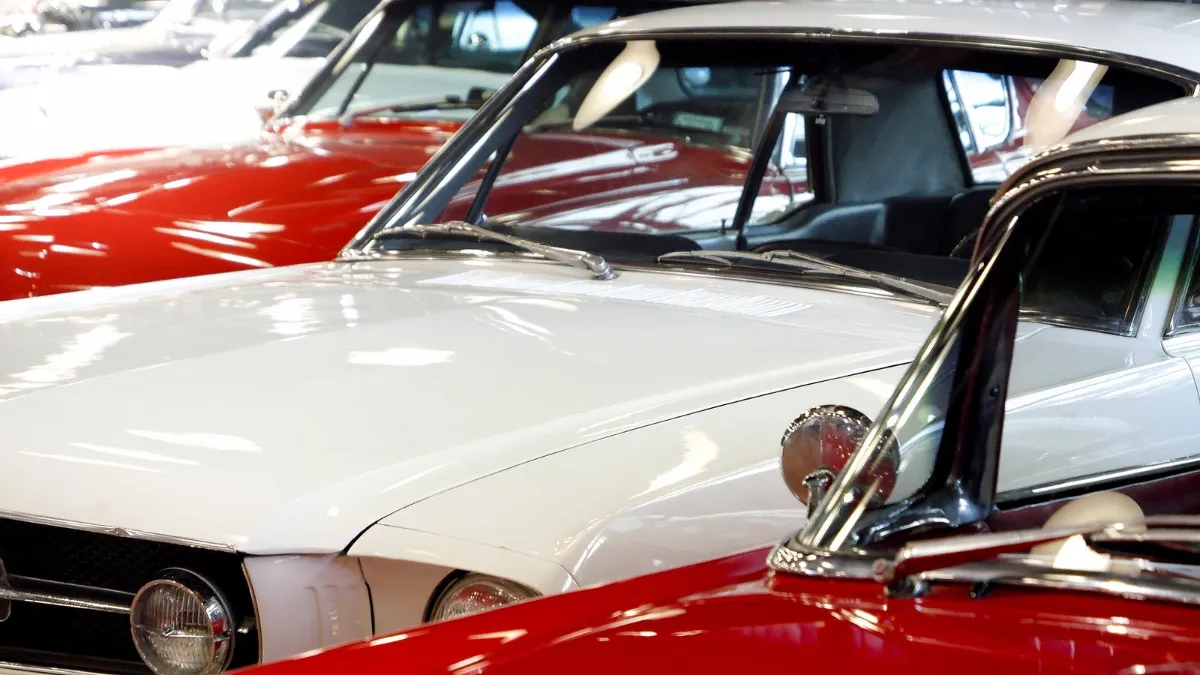
Ask around Bullhead City and you will find that the garage is where a lot of life happens. Boats come back on trailers dripping river water. Jet skis get rinsed down. Coolers, wet towels and sandy shoes land on the slab. In summer, the garage door might stay open half the day just to move some air.
Bare concrete does not cope well with any of that. It soaks up oil and fuel, powders into dust under tires and turns into a sandy mess after a weekend on the water. Garage paint from the hardware store tends to peel within a season or two, usually right where tires sit. A full coating system, installed on properly prepared concrete, solves those problems for years. This page covers how we build one and what is different about doing it here.
Most peeling garage floors we see were rolled with a one-part epoxy paint over concrete that was only washed or acid etched. The film is thin, the bond is shallow, and once the slab heats up under a car that has just come home on a 110-degree afternoon, the softened coating sticks to the tire instead of the floor. That is hot-tire pickup, and it is the most common complaint about cheap garage floors in the desert.
A professional system works differently. The concrete is mechanically ground to open the pores and remove anything weak on the surface. The base coat is a true two-part resin that soaks in and bonds chemically. Layers are built to a measured thickness, and the topcoat is chosen for hardness and light stability. When those things are done right, a hot tire has nothing to grab.
Grinding. Diamond tooling removes laitance, sealers and stains and leaves a profile the coating can grip. Dust goes straight into a HEPA vacuum.
Repairs. Cracks are chased out and filled, pitting is patched, and spalled edges along the door are rebuilt.
Base coat. A pigmented epoxy or polyaspartic primer seals the slab and sets the background color.
Broadcast. Colored vinyl flake is thrown into the wet base for texture and camouflage. Coverage can be full or partial.
Topcoat. A clear, UV-stable polyaspartic or urethane locks everything in and takes the daily wear.
Some garages, such as a showroom-style space with no flake, get a solid-color system instead. The steps are the same, only the look changes.
We tailor the build to how the garage gets used. These are the four we install most often.
Base coat, full broadcast of flake and a polyaspartic topcoat. Hides sand and dust best and suits most family garages.
Fast-curing polyaspartic base and topcoat, so the garage is walkable the same evening. See polyaspartic coatings.
Thicker base, extra build under jacks and stabilizers and a harder topcoat for trailers and big tires.
Single color, often light grey, with a grit topcoat. Clean and simple for workshops and gyms.
If you are torn between options, we bring samples and talk through how the garage is really used. Often the answer is obvious once we see the boat trailer or the toy hauler.
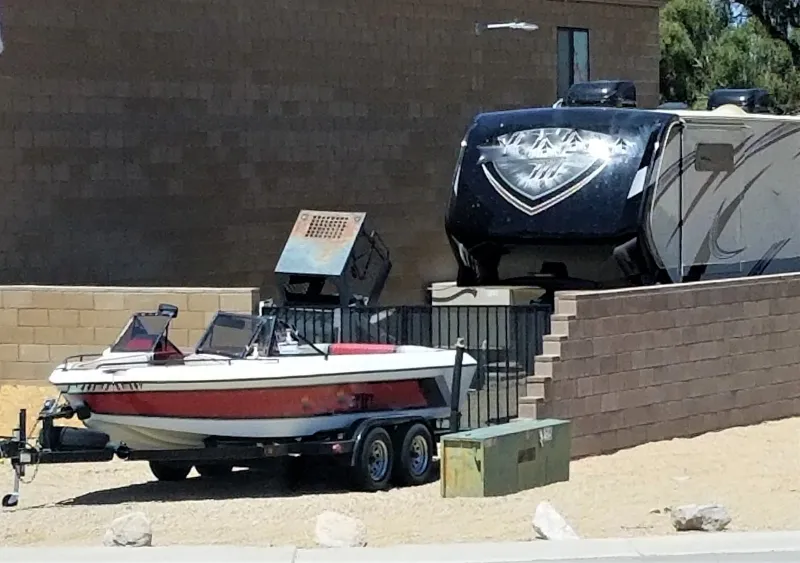
Big vehicles change the job. An RV or a fifth-wheel puts a lot of weight on a small contact patch, and leveling jacks and tongue jacks concentrate it further. Boat trailers drip water and sometimes fuel. Toy haulers bring in whatever the desert washes left on the tires.
For these bays we:
A coated RV garage is also far easier to keep clean, which helps when the coach sits for the summer.
In warm months we start at first light, while the slab is cool. The garage stays closed to keep dust and sun off the floor.
Diamond grinders run with vacuum extraction. Edges are ground by hand.
Cracks, pits and joint edges are filled with fast-setting repair material and ground flush.
The base coat goes down in sections sized to the slab temperature, and flake is thrown while it is wet.
We knock down any standing chips, vacuum the leftovers and roll the clear wear layer over everything.
We check the floor with you and give cure times for foot traffic and vehicles.
The river valley is one of the hottest places in the country through summer, and garage slabs absorb that heat. A west-facing garage with the door open can see concrete temperatures well above the air temperature by late afternoon. That matters in two ways.
During installation, heat shortens working time, so we mix in smaller batches, start at dawn, and sometimes choose slower hardeners. After installation, heat and UV keep working on the floor. A standard epoxy topcoat would yellow and chalk where sunlight hits it, so every garage we coat gets a light-stable topcoat. Lighter flake blends also stay noticeably cooler underfoot than dark ones.
The difference between a garage floor that lasts and one that peels comes down to preparation, product and timing. Grinding equipment, industrial resins and the know-how to work them in desert heat are not things that come in a weekend kit. When a coating fails, it also has to be ground off before anything else can go down, which makes a second attempt more expensive than doing it properly the first time.
Flake blends with a mix of tan, grey and a little black hide river sand and desert dust very well. Pure greys look sharp but show tan dust sooner. Dark blends look striking but heat up more in the sun and show dust and water spots. For most Bullhead City garages, we steer people toward mid-tone blends with warm undertones that suit the stucco and stone of local homes. We always bring physical samples so you can see them in your own light.
The edges of a garage floor are where a job looks finished or not. We can carry the coating up the short stem walls around the perimeter, which keeps water and dirt from staining the bottom of the drywall. Steps into the house can be coated with a matching nosing. At the door, we grind and seal right to the edge of the slab and finish with a clean line under the weatherstrip. If the driveway joint is cracked or uneven, we discuss it at the estimate.
Sweep or blow out sand regularly, since grit is what dulls a topcoat over time. Rinse with a hose and a soft deck brush when it needs it, using a pH-neutral cleaner. Wipe up fuel, oil and brake fluid when you see it. Put a mat or drip tray under the boat outboard, and pads under RV stabilizers. Avoid dragging metal stands across the floor. After many years, a worn topcoat can be lightly sanded and recoated without redoing the whole system.
Size is the starting point, but the condition of the slab often makes the bigger difference. Old paint or coatings need to be removed, deep cracks take time, and moisture problems can call for a special primer. The system matters too: a one-day polyaspartic system and a heavy-duty RV bay build cost more than a standard flake floor. Extras such as stem walls and steps are listed separately so you can choose.
Plenty of local garages are part workshop, part gym and part storage. If you lift weights, we may suggest rubber mats in the lifting zone on top of the coating. For woodworking and metalwork, a solid light color makes small parts easier to find. For garages where vehicles share space with a laundry or freezer, a textured topcoat around the appliances helps with spills. Tell us how you use the space and we will plan the floor around it.
It depends on the system and the temperature. Polyaspartic floors are often ready for cars in about a day; epoxy systems usually need longer. We give you a specific time when we finish.
Not when the slab is ground, the system is built to proper thickness and it is allowed to cure fully. Peeling is usually a sign of thin paint or poor prep.
No. Old paint and coatings have to be ground off so the new system bonds to the concrete itself.
A smooth, glossy floor can be slick when wet. Flake adds texture, and we can add a fine grit to the topcoat where it matters most.
Yes, the floor needs to be completely clear. Plan to keep things out until the coating has cured.
We fill them before coating. Moving cracks can still telegraph through over time, and we will tell you if we see any that might.
We have many flake blends and can usually find one that complements your stucco and trim. Custom blends are also available.
Grinding is noisy for a few hours, but dust is pulled into vacuums at the source. The rest of the job is quiet.
Tell us what lives in your garage, whether a car, a boat or an RV, and we will come out to look at the slab and give you a written quote.
Prefer to talk? (928) 555-0147