Textured resurfacer
A thin cement-polymer layer troweled or sprayed in a knockdown or stone texture, then sealed. Covers old patches and stains.
Outdoor living is a big part of life here for most of the year. A coated patio or pool deck looks better, cleans easier and can be kinder to bare feet than raw concrete.
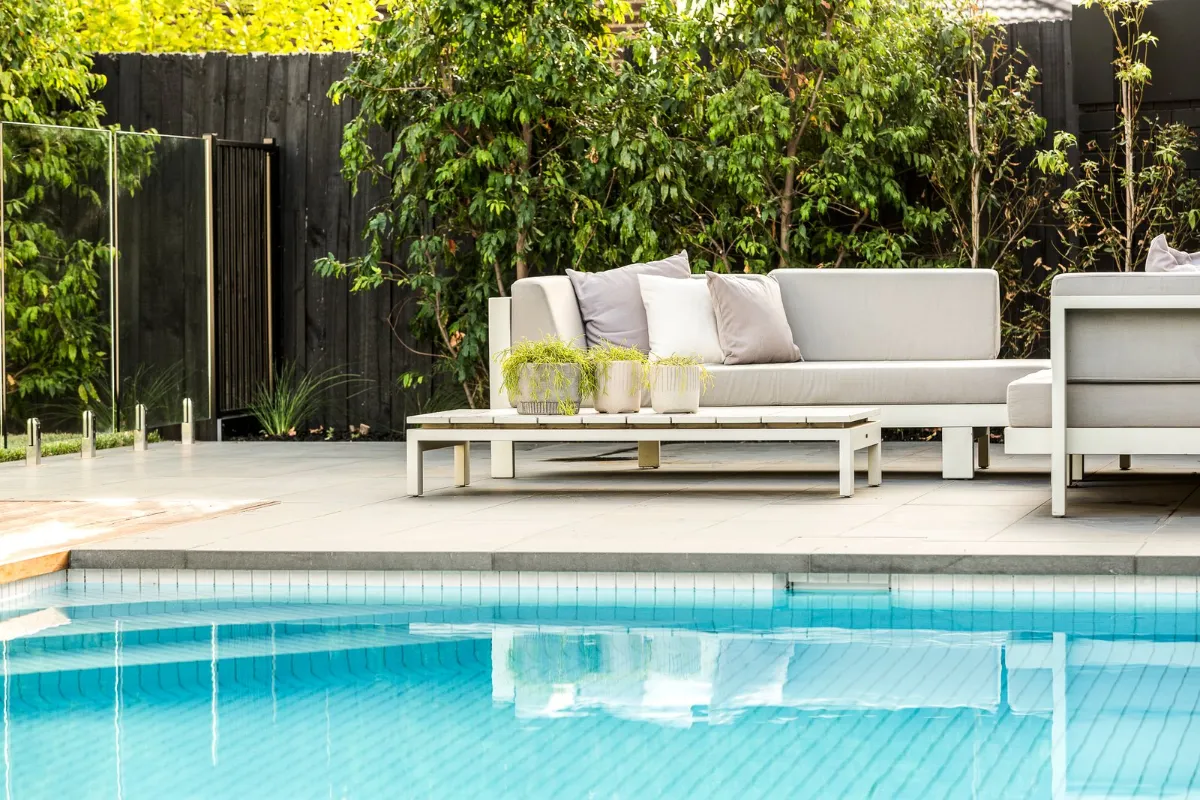
From October to May, the weather along the river is about as good as it gets, and patios fill up with family dinners, barbecues and guests. In summer, life shifts to the pool and the shade. Either way, outdoor concrete works hard. It cracks, stains from rust and leaves, grows dull and, on a summer afternoon, gets hot enough to make you hop.
Outdoor coatings are a different animal from garage floors. They need to handle direct sun all day, water and pool chemicals, bare feet, and slabs that expand and contract with big temperature changes. This page explains what we use outside, how we make surfaces cooler and safer, and where outdoor coatings make sense.
A standard epoxy garage floor would struggle on an open patio. Epoxy yellows and chalks in direct sun, becomes slick when wet and does not breathe, so moisture rising from the ground can lift it. On a dark color, it also gets very hot.
Outdoor systems are designed differently. We use breathable acrylic and cementitious resurfacers, polyaspartic topcoats that stay stable in UV, and textured finishes that grip when wet. The goal is a surface that looks good, stays cooler and survives years of desert sun.
The right system depends on the existing slab, how much shade it gets and how it is used.
A thin cement-polymer layer troweled or sprayed in a knockdown or stone texture, then sealed. Covers old patches and stains.
Light, textured coating designed to reflect heat around pools.
Penetrating color and a clear UV-stable sealer for slabs in good shape.
A flake system with a polyaspartic topcoat for shaded patios and outdoor kitchens.
No coating can make concrete cool on a 115-degree afternoon, but color and texture make a noticeable difference. Light colors reflect more sunlight, while dark colors absorb it. Textured surfaces have less contact with your feet than smooth ones and shed heat faster.
That is why we steer outdoor projects toward light sand, cream, light grey and soft tan, and away from dark browns and charcoals. Around pools, a textured cool-deck style finish is a common choice. We also recommend shade where possible, because shade beats any coating for comfort.
We check for cracks, drainage problems, moisture and old sealers.
Pressure wash and grind or shot-blast to remove sealers and open the surface.
Cracks are filled and expansion joints respected or re-cut.
Resurfacer, color or base coat, applied in the cooler hours.
A UV-stable, slip-resistant topcoat finishes the surface.
We keep foot traffic, furniture and water off until it is ready.
Outdoor concrete in Bullhead City faces strong UV, extreme surface temperatures, low humidity for most of the year and occasional monsoon downpours that drop a lot of water fast. Slabs expand in the heat and contract on cooler nights, which opens cracks over time.
We plan for all of it: breathable systems on slabs that sit on soil, UV-stable topcoats, light colors, and respect for expansion joints so the surface can move without cracking. Application happens early in the morning in warm months, and we avoid days when storms are expected.
Outdoor coatings fail in different ways from indoor ones: moisture lifting from below, sun breaking down the topcoat, slick surfaces near water and cracks reopening through the finish. Avoiding these takes the right products and careful prep. A good outdoor installer knows how to read a slab, where to put the joints and how to work in the heat.
Pool decks get splashed with chlorinated or salt water daily. Coatings must resist those chemicals and the efflorescence that can appear when salt water soaks into concrete. We choose finishes tested for pool use, slope-sensitive textures that drain well, and topcoats that handle chlorine. Coping and tile edges are masked carefully, and we coordinate with your pool service so chemicals are balanced before and after the work.
Almost every outdoor slab here has some cracks. Small, stable cracks can be filled and coated over. Larger or moving cracks are better treated as joints, with a flexible sealant that lets the slab move. Pretending a moving crack does not exist usually results in a line that reappears through the coating within a year. We are honest about which cracks are likely to show again.
Outdoors, color affects comfort as much as style. We recommend light tones for anywhere people walk barefoot. Texture options range from a fine sand finish to a heavier knockdown that hides imperfections and gives plenty of grip. Samples are viewed outside, in full sun, because colors look very different there than indoors.
Sweep leaves and debris, and rinse or wash with a mild cleaner. Avoid pressure washers set too high, which can damage the finish. Outdoor topcoats wear faster than indoor ones because of the sun, so plan on resealing every few years to keep color and protection. Resealing is quick and much cheaper than resurfacing.
Outdoor projects are priced on area, condition, the system chosen and access. Removing old sealers or failed coatings, grinding high spots, repairing cracks and working around pools and landscaping all add time. Resurfacers and cool-deck finishes cost more than stain and seal. Your written quote shows each part separately.
Outdoor kitchens see grease splatter, dropped food, marinades and cleaning products. Uncoated concrete soaks these up and stains permanently. A sealed, textured coating keeps spills on the surface where they can be wiped up. We use topcoats that resist grease and cleaning chemicals and choose colors that hide the occasional spot. Areas around grills get extra attention because of heat and drips.
The front walk and entry are the first things visitors see. Cracked, stained or patched concrete makes even a nice home look tired. A resurfacer or stain-and-seal system gives a clean, uniform finish that can complement your stucco, stone and landscaping. For HOA communities, we can work with approved color schemes and provide samples for review before work begins.
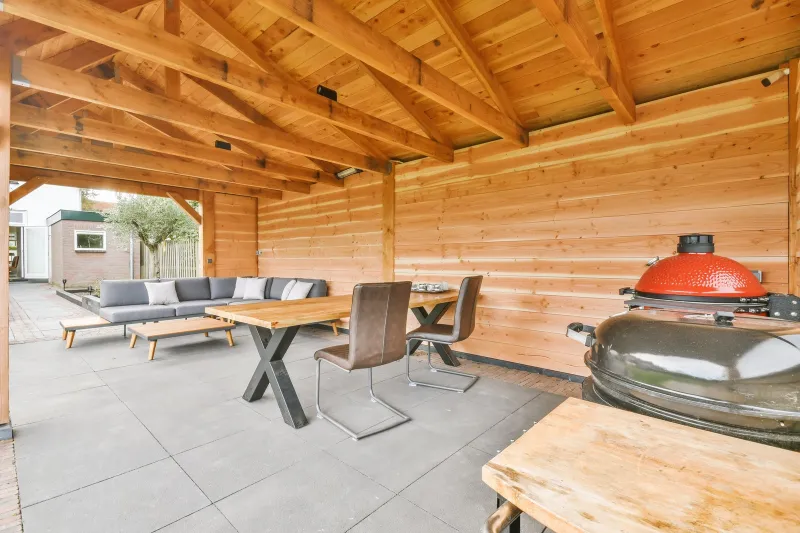
Patios under a roof or shade sail get far less direct sun, which opens up more coating options. A covered patio can take a flake system or a solid color with a polyaspartic topcoat, giving a finished, indoor-outdoor look. We still use UV-stable topcoats because reflected light and low winter sun reach under most covers, and we keep colors light so the space stays comfortable.
Any concrete gets hot in full sun. Light colors and textured finishes stay noticeably cooler than dark, smooth ones, and we design outdoor systems with that in mind.
Sometimes. If the old surface is well bonded, it can be cleaned and recoated. If it is flaking, it needs to come off first.
Outdoor systems are textured for grip, and we add extra texture around pools and steps.
It depends on sun exposure and use. Topcoats need resealing every few years; the base layers last much longer.
Yes. Resurfacers and solid colors cover most stains and old repairs.
No. We protect the water and edges during the work.
Yes. Carports often benefit from a flake or solid system with an oil-resistant topcoat.
Fall through spring is easiest. Summer work is possible but limited to the early morning hours.
Tell us about your patio, pool deck or walkway. We will look at the concrete, show you colors in full sun and give you a written quote.
Prefer to talk? (928) 555-0147