Full polyaspartic garage
Base, flake and topcoat all polyaspartic. Fastest return to service.
Polyaspartic coatings cure fast and resist UV far better than standard epoxy. In a place with this much sunshine, they are often the smartest choice for a garage, patio or shop.

Polyaspartic is a type of polyurea, developed to be easier to apply on floors than the spray-grade polyureas used for truck beds and tank linings. It has become a favorite in hot, sunny regions for good reasons: it cures quickly, it stays clear and color-true in sunlight, and it is harder and more abrasion-resistant than most epoxies.
In Bullhead City, that combination solves real problems. Garage doors open to the afternoon sun. Patios and pool decks bake all summer. Businesses do not want to close for days. This page explains how polyaspartic works, where it shines and where it needs careful handling.
Epoxy is the workhorse of floor coatings. It bonds strongly, builds thickness and costs less. But it has two weaknesses that matter here. It yellows and chalks when exposed to UV light, and it can take days to cure fully, especially in cooler weather.
Polyaspartic addresses both. It is aliphatic, which means it does not yellow in sunlight. It cures in hours instead of days, and it keeps curing at temperatures where epoxy would stall. It is also notably harder, so it resists scratches from sand and grit. The trade-off is that it sets fast, which shortens working time and demands experienced hands.
Many of our systems use both: epoxy or polyaspartic for the base, and polyaspartic for the topcoat.
Our one-day garage system uses polyaspartic for both the base and the topcoat. We grind and repair in the morning, apply the base and flake, scrape, and roll the topcoat, often finishing by early afternoon. You can usually walk on it that evening and park on it the next day or so, depending on temperature.
That speed is popular with people who cannot leave cars outside for long, especially in summer when a car parked in the sun becomes an oven. It is also useful for winter residents on a tight schedule and for rentals between bookings.
Polyaspartic can be the whole system or one part of it.
Base, flake and topcoat all polyaspartic. Fastest return to service.
Thick epoxy for build and bond, polyaspartic for UV and scratch resistance.
Protects stamped or stained concrete outdoors without yellowing.
Quick-return finish for businesses that need to reopen fast.
We measure slab temperature and humidity before mixing anything.
Polyaspartic bonds best to a well-profiled surface, so grinding is never skipped.
Material is mixed in amounts that can be spread before it sets.
Crews work wet edge to wet edge in a planned pattern.
Flake goes into the base while it is still open; scraping follows quickly.
The clear coat goes down last, and we give you cure times.
The same fast cure that makes polyaspartic attractive also makes it demanding in summer. On a hot slab, pot life can shrink to a few minutes. If the material starts to set in the roller, the floor will show lap marks and thin spots. That is why we start at first light, keep the garage closed and shaded, and choose slower formulations for the warm months.
Humidity plays a part too. Monsoon storms bring sudden moisture, and some polyaspartics react to it. We watch the forecast and adjust timing and products when a storm is building.
Polyaspartic does not give second chances. Mistakes in mixing, spreading or timing show up within minutes and cannot be fixed without grinding. DIY kits sold as polyaspartic are usually thinned for long working time, which removes much of what makes the product worth paying for. A trained crew can apply professional-grade material properly and still finish fast.
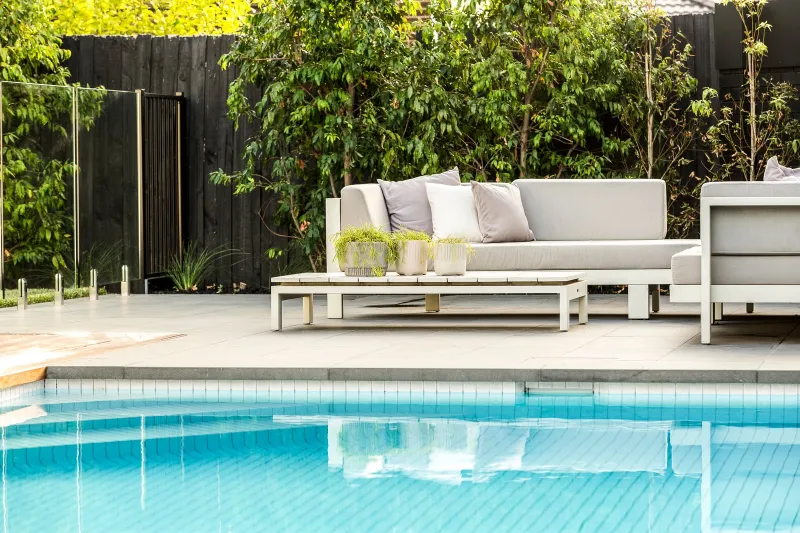
Because it stays clear in the sun, polyaspartic is our go-to topcoat for covered and open patios, pool surrounds, entry walks and outdoor kitchens. It protects stained or stamped concrete and keeps the color from fading. On hot outdoor surfaces we add texture for grip and recommend lighter tones to keep the surface cooler. Our patio and concrete coatings page covers outdoor systems in detail.
Not always. Epoxy is less expensive, builds thickness more easily, and has a longer working time, which helps with metallic designs and self-leveling floors. In a fully enclosed room with no sunlight, the UV advantage of polyaspartic matters less. That is why many of our systems pair an epoxy base with a polyaspartic topcoat. We recommend what fits the floor rather than one product for everything.
Polyaspartic floors are easy to keep clean. Sweep or blow off sand, and rinse or mop with a neutral cleaner. Wipe up fuel and oil when you notice them. Over many years, high-traffic areas may lose a little gloss. The surface can be scuffed and recoated in a day, which keeps the floor looking new without starting over.
Polyaspartic materials cost more than epoxy, and the fast pace of installation requires a larger, experienced crew. Full polyaspartic systems are usually priced above standard epoxy and flake floors. In return you get a faster return to service and better long-term resistance to sun and scratches. We itemize every quote so you can compare systems side by side.
Hot-tire pickup is a common worry in a place where cars come home with tires near the temperature of the road. Polyaspartic topcoats are hard and heat-tolerant once cured, which makes them a good defense. The bigger factor, though, is bond: a coating that is properly anchored to ground concrete has nothing to peel from. We pair polyaspartic with thorough grinding and give clear guidance on when to drive on the floor.
Vacation rentals and seasonal homes often have tight windows between guests or between a homeowner leaving and returning. A polyaspartic system that is walkable the same evening and ready for cars soon after fits those windows well. We can coordinate access with property managers, finish before the next booking, and leave a note with care instructions for the next guests.
Stamped and stained concrete around entries and patios looks great when new but fades and dulls quickly in strong sun. A clear polyaspartic sealer restores depth of color and protects against UV, stains and wear. Unlike some acrylic sealers, it does not turn milky or soften on hot days. Texture can be added for grip near pools and steps.
It is a type of aliphatic polyurea designed for floor work, with longer working time than spray polyurea. See our polyurea page for the difference.
Often about a day after the topcoat, depending on temperature and product. We will confirm the time on the day.
No. Aliphatic polyaspartic is UV-stable and stays clear in sunlight.
Yes. It is one of the best topcoats for patios and pool decks in strong sun.
Generally yes, which gives it better scratch and abrasion resistance.
Yes, but only in the cooler hours and with formulations suited to heat.
Some formulations have a strong smell during application that fades quickly. We ventilate and tell you what to expect.
Sometimes, if the old floor is well bonded. It must be sanded and cleaned first, and we check adhesion before recommending it.
Tell us about your garage, patio or business and when you need it back. We will look at the slab and quote the best system for the timeline.
Prefer to talk? (928) 555-0147