High-build epoxy
Thick, hard layers for heavy forklift traffic and racking aisles.
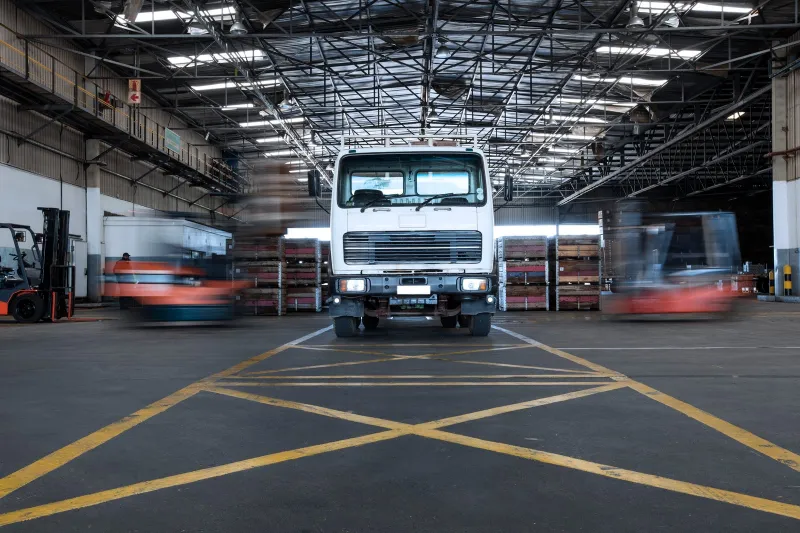
Forklifts, pallet jacks and heavy stock wear concrete down and fill buildings with dust. A heavy-duty coating protects the slab, brightens the space and makes it safer to work in.
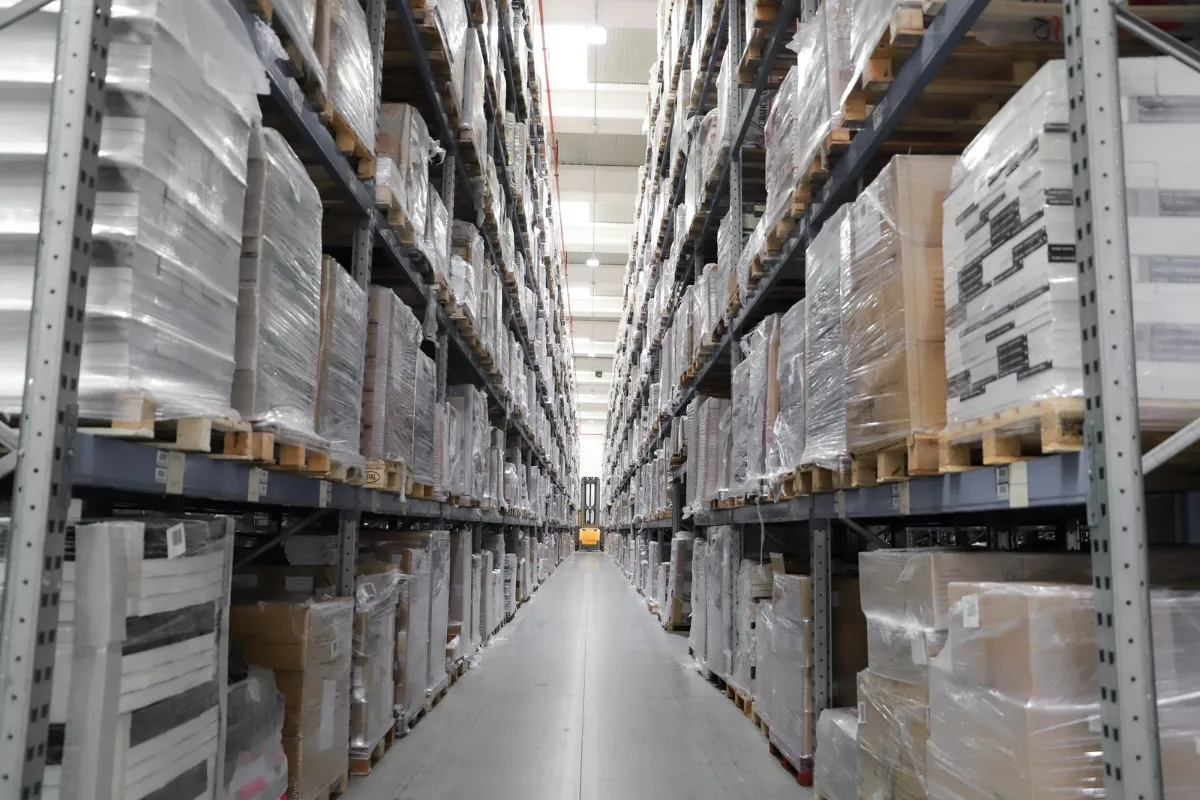
The corridor along Highway 95 and the industrial areas up toward Kingman hold a mix of warehouses, distribution buildings, self-storage, fleet yards, marine and RV storage and light manufacturing. Most of these buildings have bare concrete floors, and most of those floors are slowly wearing away.
Bare concrete under forklift traffic sheds dust that settles on stock, gets into machinery and makes the building look neglected. Joints break down at the edges, and spills soak in. A heavy-duty coating system stops that wear, seals the dust and makes cleaning simple. This page explains the systems we use for warehouses and industrial buildings and how we install them without stopping your operation.
Concrete is strong in compression, but its surface is relatively weak. Hard forklift wheels grind it down, pallet jacks scrape it, and steel-wheeled carts chip it. The result is dusting, a fine powder that never stops coming off the floor. Joints are worse: wheels hit the edges every time they cross, and the edges crumble.
Spills add to the problem. Hydraulic fluid, oil and chemicals soak into bare concrete and break it down further. A coating protects the surface from all of this, and repairing joints before coating stops the edge damage.
We match the system to the traffic, the chemicals and the budget.
Thick, hard layers for heavy forklift traffic and racking aisles.
Flexible and impact-resistant for buildings with big temperature swings. See polyurea coatings.
Cost-effective dust control for light-traffic storage areas.
For areas with battery charging, fuels or aggressive cleaners.
Before coating, we deal with the slab's weak points.
Good joint work extends the life of the whole floor and makes forklift traffic smoother and quieter.
We look at slab condition, joint damage, which fluids are used and when the building is quietest.
Work is divided into zones so stock and operations can move around us.
Heavy grinding or shot-blasting with dust extraction, plus joint and crack repair.
System layers applied zone by zone, with conditions monitored.
Lanes, zones and markings applied as part of the system.
Inspection, cure times and maintenance guidance.
Many industrial buildings in the area are metal structures with large roll-up doors and limited cooling. In summer, slabs near the doors can get very hot while interior slabs stay cooler. Dust and grit blow in whenever the doors open.
We schedule coating for the cooler hours, keep doors closed during application where possible and choose products suited to the temperature range of the building. Thresholds at roll-up doors get extra build and texture because they see the most heat, grit and traffic. In Kingman and Golden Valley, where winters are colder, we plan the season around both extremes.
Industrial coating requires heavy grinding or blasting equipment, the knowledge to choose systems for specific loads and chemicals, and the planning to work around a live operation. A failed floor in a working warehouse means downtime, damaged stock and an expensive removal job. We take the time to specify correctly and install carefully.
Floor markings organize traffic and improve safety. We lay out and coat forklift lanes, pedestrian walkways, staging areas, no-parking zones in front of exits and fire equipment, and color-coded storage areas. Because markings are built into the coating system, they last far longer than paint on bare concrete and stay crisp through years of traffic and cleaning.
Light grey is the standard warehouse color because it reflects light, shows spills and hides tire marks reasonably well. Lighter floors can significantly brighten a building and make it easier to read labels and spot debris. Safety yellow, red and blue are reserved for markings, so they keep their meaning. Dark colors are rarely a good choice because they absorb light and show the pale dust that blows in.
A coated warehouse floor is far easier to maintain than bare concrete. Regular sweeping or auto-scrubbing with a neutral cleaner keeps it in good shape. Clean up spills promptly, especially hydraulic fluid and battery acid. Inspect high-wear areas, such as dock plates and aisle ends, periodically. When wear appears, the topcoat can be renewed in those areas without redoing the whole floor.
Price depends on area, slab condition, the extent of joint and crack repair, the system and its thickness, access around racking and equipment, phasing and markings. Large open areas cost less per square foot than smaller, congested spaces. We provide an itemized proposal so you can prioritize investment where it matters most.
Most warehouses cannot empty out for a floor project. We can coat aisles and open areas without moving racking, leaving the floor under the racks as is or sealing it with a densifier. If full coverage is needed, we work zone by zone, coordinating with your staff to move stock in stages. The phasing plan is agreed before work begins, so there are no surprises.
Covered and enclosed storage for boats and motorhomes is common around the river, and these buildings have their own wear patterns. Heavy tandem trailers pivot on the slab, tongue jacks dig in, and stored vessels drip bilge water, oil and fuel. A coated floor makes those drips easy to spot and wipe away before they stain, and it keeps the building cleaner for customers who walk through. We usually specify a thicker build in parking rows and a textured finish along the main drive aisle.
Forklift charging stations, parts washers and fluid storage corners deserve their own specification. Battery acid etches bare concrete quickly, and solvents can soften ordinary topcoats. We use chemical-resistant layers in these zones, extend them a little beyond the obvious spill area and mark them clearly so staff know where spills are likely. Containment curbs can be built into the coating where required.
A light-colored, sealed floor bounces more of the building's light back up into the workspace. In a large warehouse with high fixtures, that can make aisles noticeably brighter and labels easier to read without adding more lights. It also helps staff spot spills, dropped items and debris on the floor. It is one of the quieter benefits of a coating, and owners often comment on it after the first day back in the building.
Usually, yes. We work in zones and outside operating hours where practical.
Yes, with a properly specified high-build system and repaired joints.
Not necessarily. We can coat aisles and open areas around fixed racking.
It depends on the system and temperature, usually from one to several days. Fast-cure topcoats shorten the wait.
Yes. Markings are built into the coating system for durability.
For light traffic and dust control only, a densifier and sealer may be enough. Forklifts and fluids generally call for a full system.
Dock areas get extra attention, with repairs to edges and a thicker, textured coating.
Yes. We cover Kingman, Golden Valley and the river communities.
Tell us about your building, traffic and schedule. We will survey the floor and send a written proposal with phasing and timing.
Prefer to talk? (928) 555-0147